
Rider Tips and Safety
Rider Health & Injury Prevention
Powered by High Desert Sports and Spine. Because 86% of pro cyclists experience overuse injuries—don't let a "niggle" sideline your season
Welcome to Rider Tips & Safety
At Mudslinger Events, we believe the best race day is the one where you feel prepared, protected, and powerful. Whether you are a first-time rider or a seasoned pro chasing a podium, this page is your go-to toolkit for a successful season or mid-season tweak.
We’ve partnered with the industry’s leading experts to bring you a library of proactive resources—from clinical injury prevention and trail-side health to legal advocacy and mechanical hacks. Our goal isn't just to help you finish the race; it’s to keep you riding for years to come.
Explore the sections below for insider knowledge from our trusted supporters:
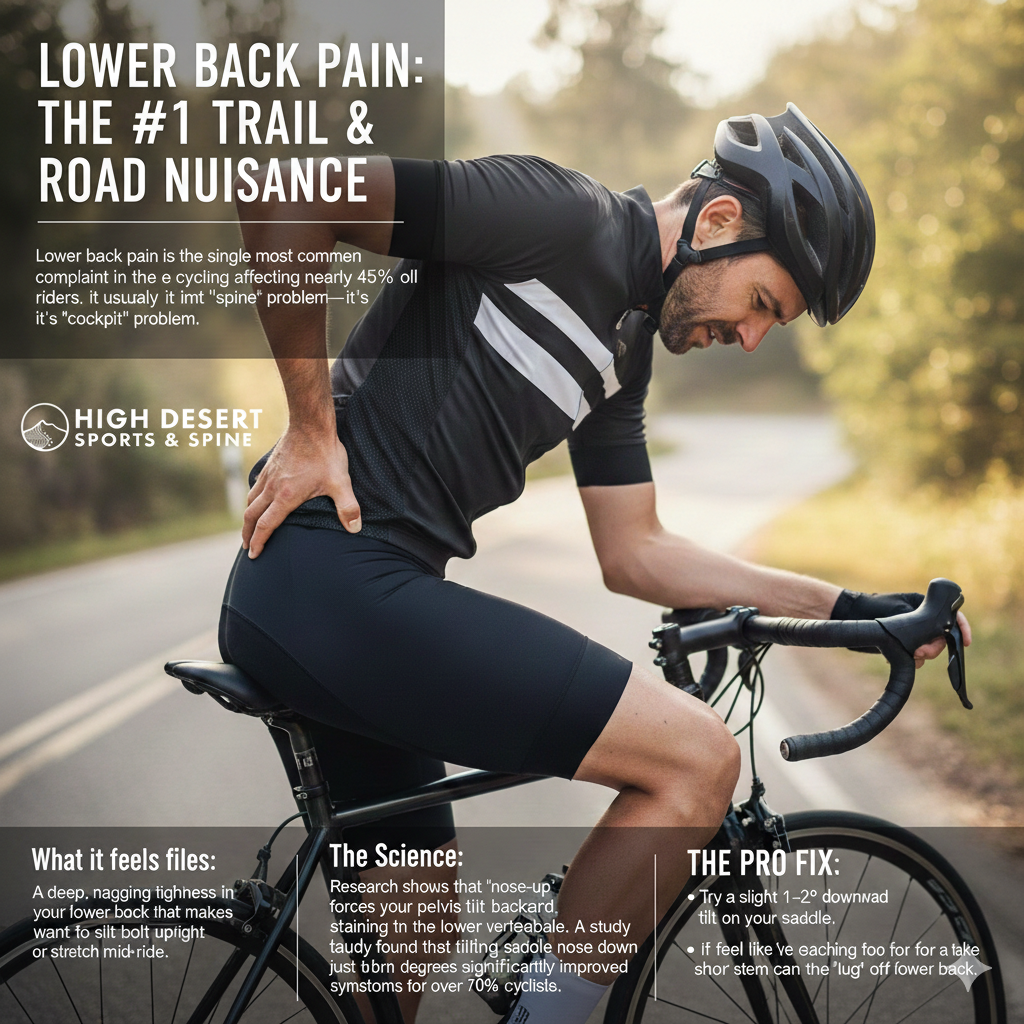
Lower Back Pain: The #1 Trail & Road Nuisance
Lower back pain is the single most common complaint in the cycling world, affecting nearly 45% of all riders. It usually isn't a "spine" problem—it’s a "cockpit" problem.
- What it feels like: A deep, nagging tightness in your lower back that makes you want to sit bolt upright or stretch mid-ride.
- The Science: Research shows that a "nose-up" saddle forces your pelvis to tilt backward, straining the lower vertebrae. A study found that tilting the saddle nose down by just a few degrees significantly improved symptoms for over 70% of cyclists.
- The Pro Fix: Try a slight 1–2° downward tilt on your saddle. If you feel like you're reaching too far for your bars, a shorter stem can take the "tug" off your lower back. If adjusting your setup doesn’t calm the symptoms, a consultation with a Sports Medicine specialist in Bend, OR can help identify whether the issue is muscular, biomechanical, or spine-related.
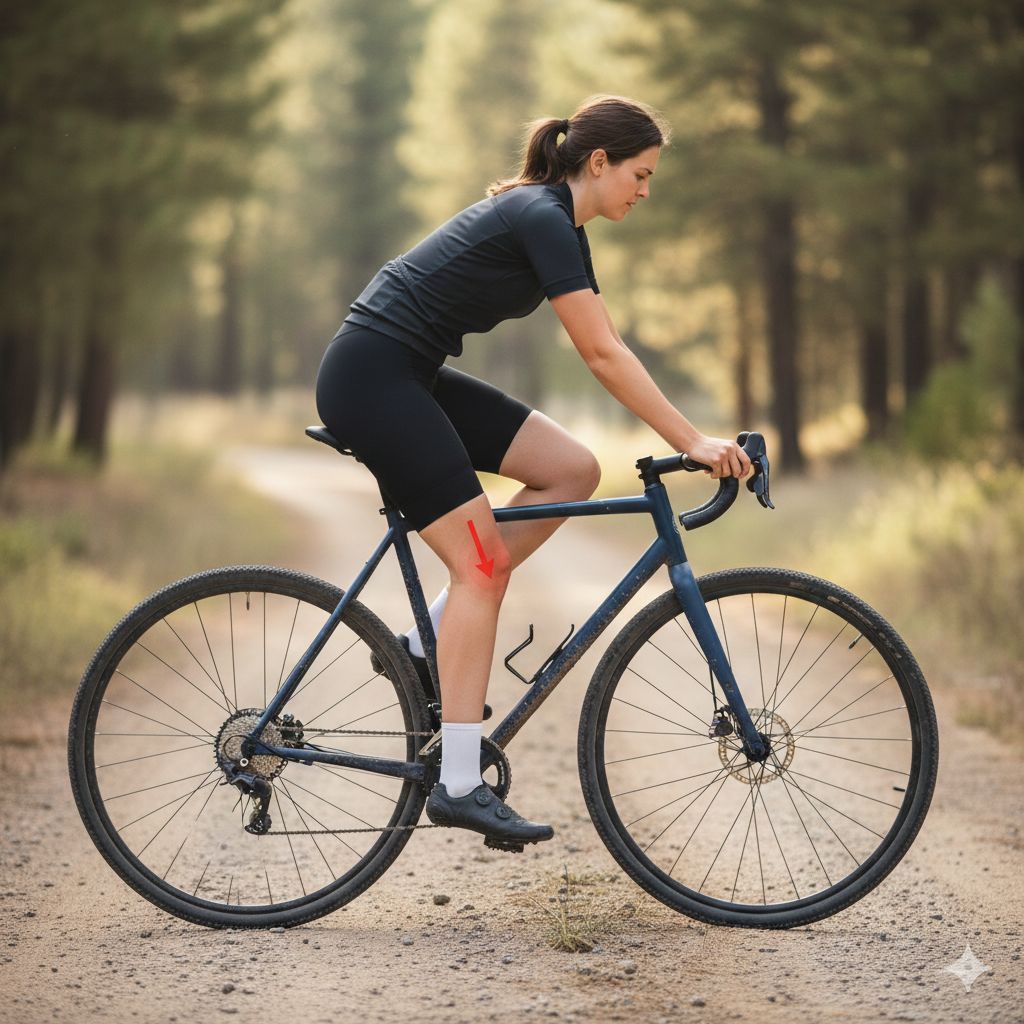
Cyclist’s Knee: (Patellofemoral Pain)
This is that dull ache behind or around the kneecap, especially noticeable when you're grinding up a steep climb or pushing a big gear.
- What it feels like: A faint clicking or stiffness at the start of a ride that "warms up" and disappears, only to return with a vengeance the next day.
- The Science: When your saddle is too low, your knee stays too bent (>35 degrees) at the bottom of the stroke. This increases the compression force on your kneecap, essentially grinding the joint under pressure.
- The Pro Fix: Raise your saddle so that your knee has a slight bend (25to 35 degrees) at the bottom of the stroke. This "sweet spot" reduces joint stress and even makes your pedaling more oxygen-efficient. If the pain is not improving, a consultation with a Sports Medicine specialist in Bend, OR can help identify underlying causes and explore treatment options to keep riding strong without pain.
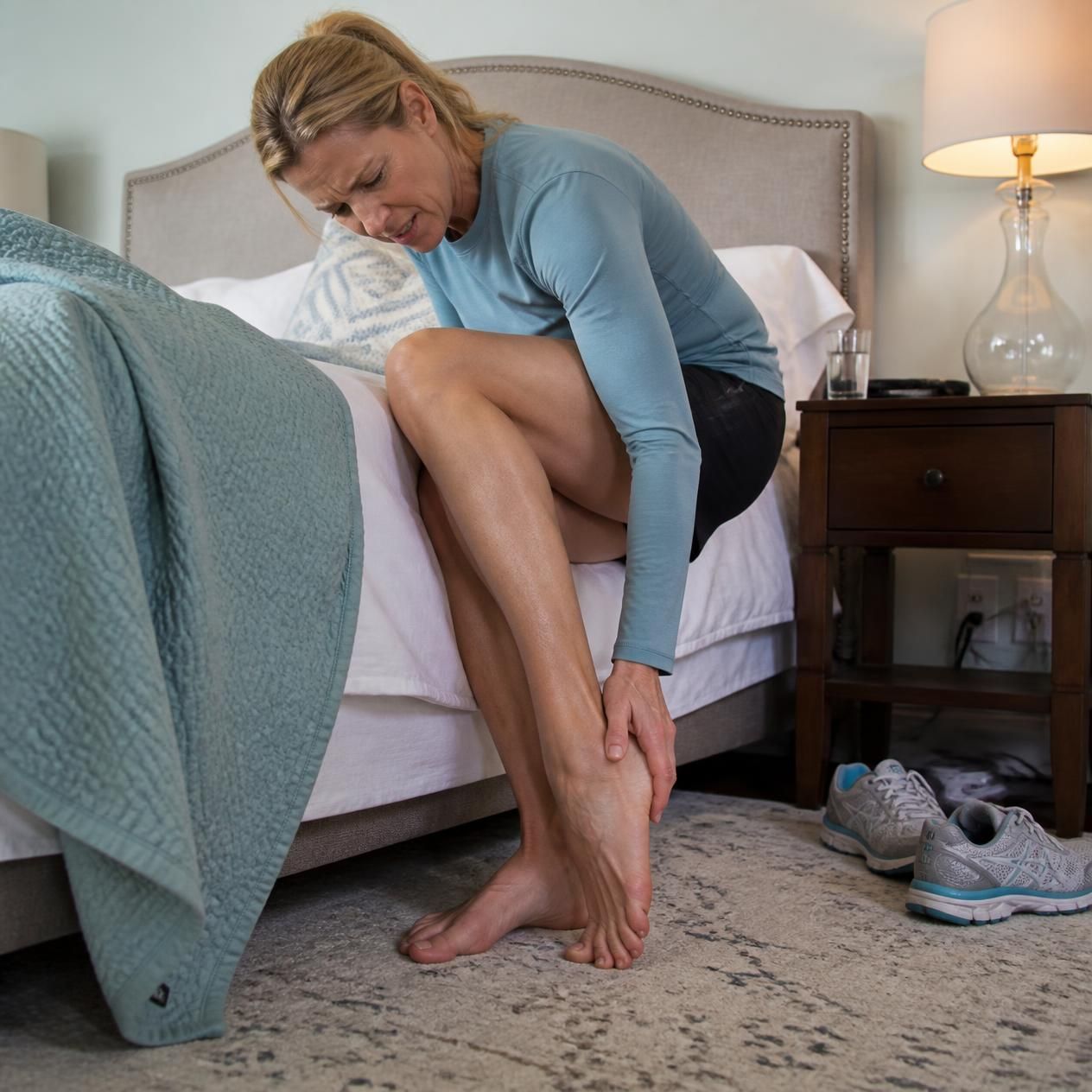
Achilles Tendinitis: The Morning Stiff Step
If the back of your heel feels like it’s "creaking" when you walk down the stairs in the morning, your Achilles is waving a red flag.
● What it feels like: A burning sensation near the heel during the first few miles of a ride that eventually "numbs out," but feels tender to the touch later.
● The Science: Cleats positioned too far toward your toes create a long "lever arm," forcing your calf muscles to work overtime to stabilize your foot. This constant tugging inflames the tendon.
● The Pro Fix: Slide your cleats back toward the mid-foot. However, the "gold standard" for fixing this isn't just a bike adjustment—it’s progressive loading. Incorporating "heel drops" into your routine builds the tendon’s resilience.
If the tenderness doesn't ease up after a few weeks of adjustments, it's worth getting a professional look at it. The team at High Desert Sports & Spine specializes in exactly these kinds of overuse tendon issues.
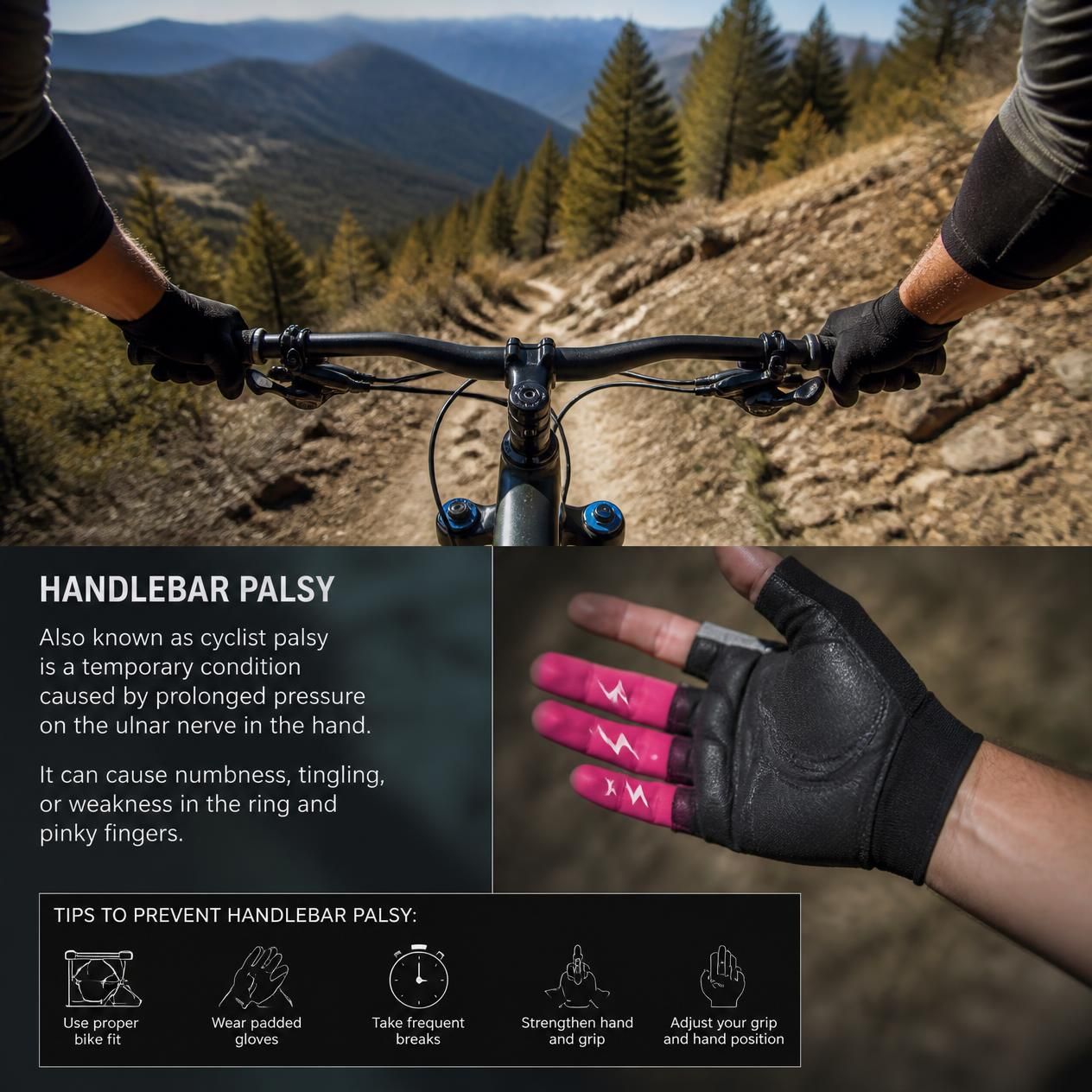
Handlebar Palsy (Numb Hands)
Ever finished a long descent only to realize your pinky and ring finger are completely numb? That’s compression of the ulnar nerve.
● What it feels like: "Pins and needles" that usually start in the pinky and spread across the palm. If ignored, it can lead to hand weakness—making it dangerous to shift or brake.
● The Science: This usually happens when you "dump" too much weight onto your hands. Whether your bars are too low or your reach is too long, the pressure on Guyon’s canal in your wrist cuts off nerve signals.
● The Pro Fix: Raise your "stack height" (the height of your bars) to shift weight back onto your sit-bones. High-quality gel gloves and double-wrapped bar tape are your best friends here.
Numbness that sticks around after a fit change isn't something to ignore. High Desert Sports & Spine can evaluate whether there's lasting nerve compression and walk you through the next steps.
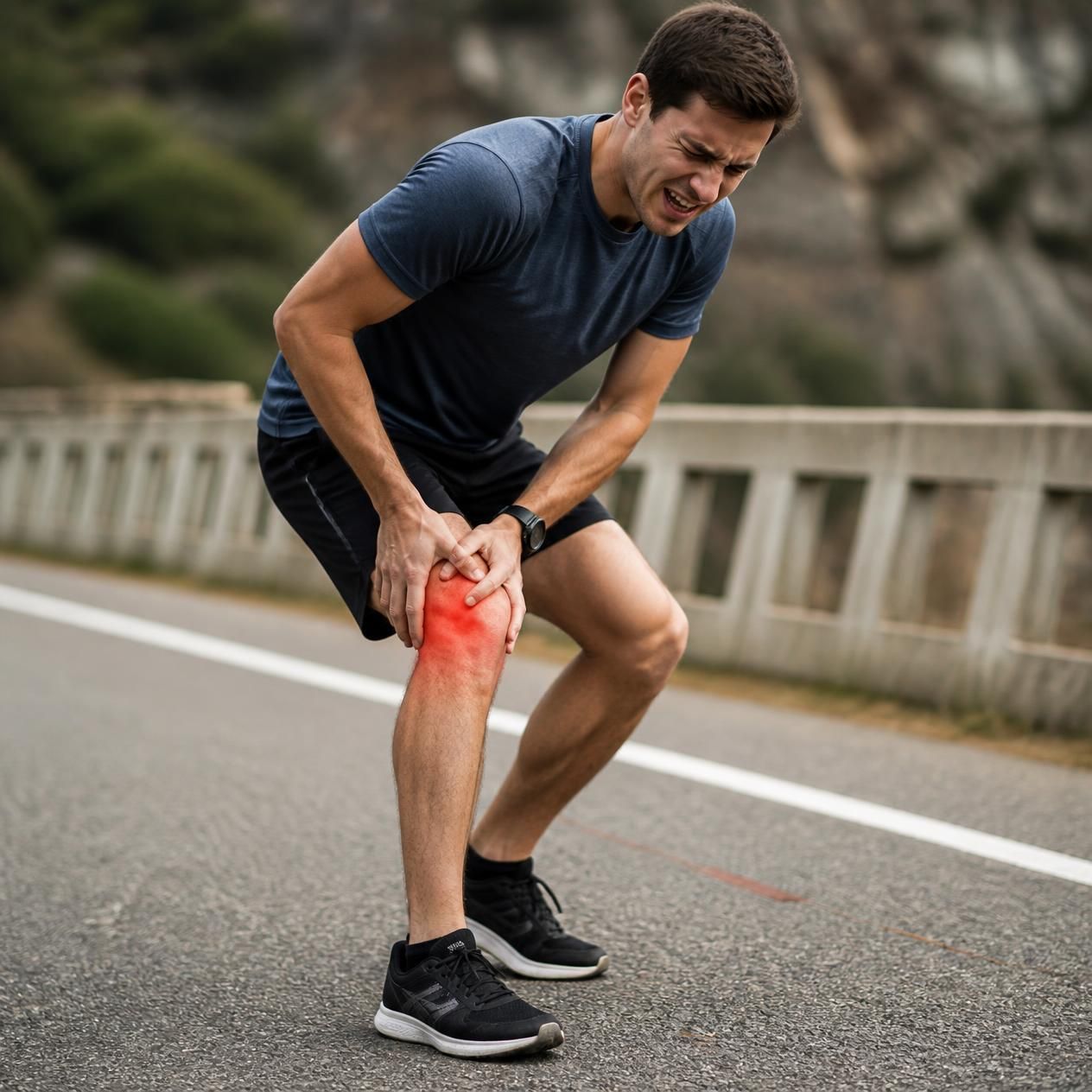
ITB Syndrome: The Outer Knee "Snap"
Unlike "Cyclist’s Knee," ITB pain is a sharp, stabbing sensation on the outside of the knee.
● What it feels like: A sharp twinge that only appears an hour into your ride, especially when you’re pushing hard.
● The Science: The ITB is a thick band of tissue that "snaps" over the bone when the knee is at a 30 degree angle. Interestingly, you cannot stretch the ITB—it's too tough. The real culprit is usually weak hips that let your knee "wobble" inward.
● The Pro Fix: Skip the ITB stretches. Instead, focus on hip strengthening (like clamshells or side planks). Ensure your cleats aren't angled "heels out," which pulls the band tighter.
If hip work alone isn't cutting it, a physician can help figure out what's actually driving the pain. High Desert Sports & Spine in Bend, Oregon, offers evaluations for exactly this kind of overuse injury.
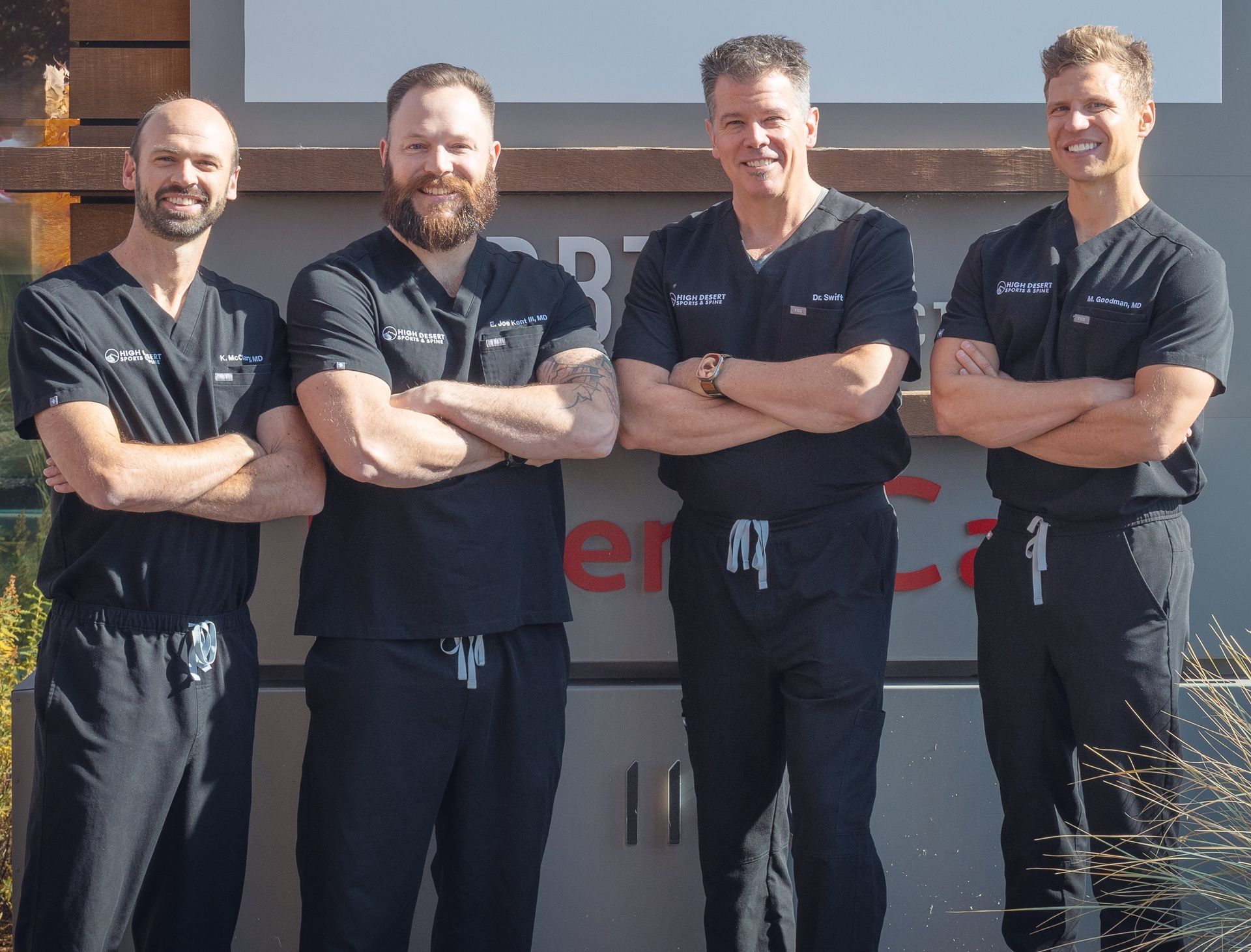
Your Team at High Desert Sports and Spine
Based in Central Oregon, High Desert Sports & Spine is a trusted resource for athletes, outdoor enthusiasts, and active individuals. Their board-certified, fellowship-trained physicians specialize in orthopedic sports medicine, interventional spine and pain management, regenerative medicine, and minimally invasive treatments designed to help patients recover faster and return to the activities they love.
What sets High Desert Sports & Spine apart is their deep understanding of endurance sports and the Central Oregon lifestyle. From runners and cyclists to skiers, hikers, and outdoor enthusiasts, their team delivers personalized care focused on treating the source of pain—not just the symptoms.
As the Official Sports Medicine & Spine Care Provider of Mudslinger Events, Central Oregon Events, High Desert Sports & Spine offers:
• Compassionate, patient-centered care
• Board-certified, fellowship-trained physicians
• Same-day or next-day appointments for many injuries
• Advanced non-surgical and minimally invasive treatment options
Their commitment extends beyond the clinic. By supporting local events, athletes, and outdoor recreation, High Desert Sports & Spine helps keep Central Oregon healthy, active, and moving forward.
Learn more or request an appointment: www.highdesertsportsandspine.com